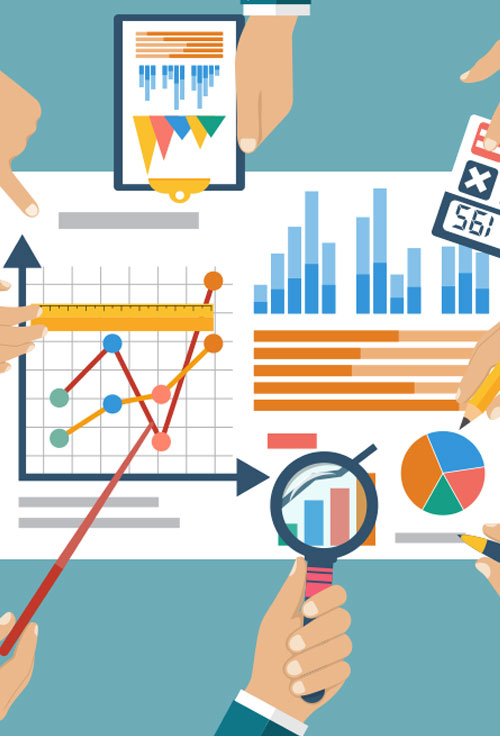
Analytics and Reporting
Analytics and reporting refer to the process of gathering, analyzing, and presenting data to support decision-making, measure performance, and improve strategies within an organization. They provide actionable insights that help companies assess how well their business processes are performing and where improvements can be made.
Here’s a breakdown of the two concepts:
Analytics
Analytics involves the use of data, statistical methods, and tools to analyze past performance and predict future outcomes. It can be used to uncover trends, patterns, and insights that are otherwise hard to spot. The primary types of analytics include:
- Descriptive Analytics: This focuses on summarizing historical data to understand what happened. It’s typically represented with dashboards or reports showing key performance indicators (KPIs).
- Diagnostic Analytics: This explores data to understand the reasons behind past outcomes. For example, analyzing customer behavior to understand why sales dropped in a particular region.
- Predictive Analytics: This uses data, statistical algorithms, and machine learning to predict future events or trends, such as forecasting sales or customer churn.
- Prescriptive Analytics: This suggests actions that can be taken to achieve desired outcomes, often using algorithms or optimization models.
Reporting
Reporting is the process of organizing and presenting data in a structured format to inform stakeholders about the performance of a business or project. Reports are typically created regularly (daily, weekly, monthly) and focus on summarizing key metrics. Some common types of reports include:
- Operational Reports: Regular reports that monitor day-to-day business activities, like sales reports, inventory levels, or customer service performance.
- Financial Reports: Reports focused on a company's financial health, such as profit and loss statements, balance sheets, and cash flow statements.
- Marketing Reports: These focus on campaign performance, website analytics, social media engagement, or customer acquisition.
- Ad-Hoc Reports: Custom reports that are created to answer specific business questions or provide insights into particular areas of interest.